Meicun Produce
Fresh Taro for export procurement

Current specifications available on request

Fresh Taro supply for B2B buyers

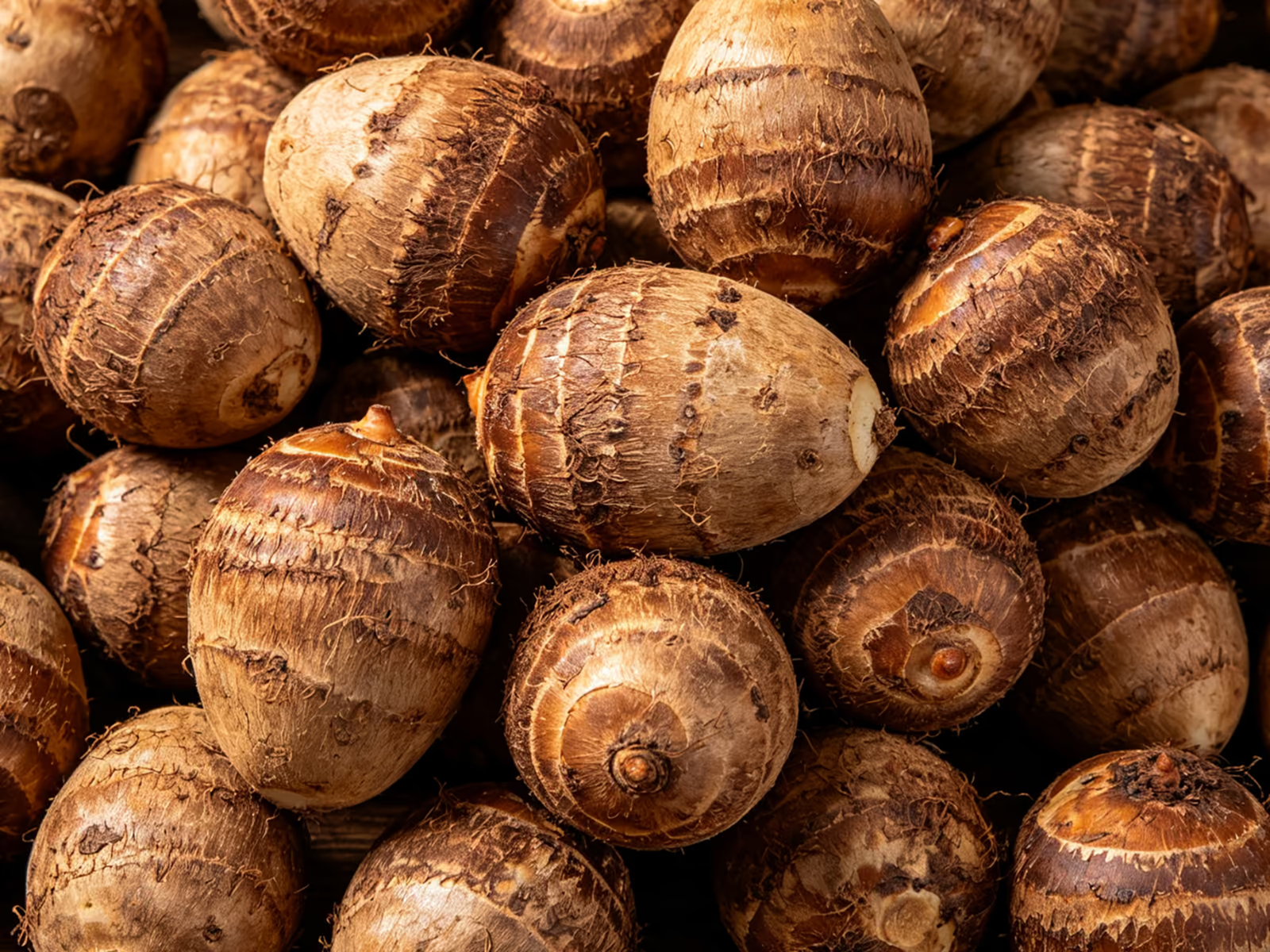
Fresh large taro and small round taro/eddoe cormels (Colocasia esculenta), supplied unpeeled and either washed or dry-brushed according to the program.

Fresh taro programs are prepared for professional procurement. Meicun coordinates lot selection, grading, packing, quality checks and destination-specific document requirements.

Typical buyers
Importers, wholesalers, processors and food-service buyers
Availability
Current-crop and stored lots may be supplied, subject to stock confirmation and pre-shipment inspection.

Indicative Procurement Specification

Typical export specifications and storage guidance are shown below. Final product specifications are confirmed against the current crop, selected lot, packing method, destination requirements and written quotation.

Final specifications are confirmed in the written quotation.

Product type / commercial options
Fresh large taro and small round taro/eddoe cormels (Colocasia esculenta), supplied unpeeled and either washed or dry-brushed according to the program.
Grade and size
Large Lipu-type taro may be selected at approximately 500 g to 1 kg+, while small taro cormels may be selected at 30–50 g or 50–80 g. Product type, roundness, diameter, individual weight and tolerance are confirmed in the written specification.
Packing
Large taro may be packed in 10 kg cartons with inner mesh and palletisation. Small taro may use 5–10 kg cartons; vacuum or nitrogen-flushed formats may be evaluated where suitable and agreed. Exact material, ventilation and food-contact requirements are confirmed before quotation.
Origin & growing conditions
Typical programs may be coordinated from river-alluvial production areas in Fujian, Shandong or Guangxi. The supplied product profile identifies deep loam with strong organic matter as favourable conditions. Actual origin, product type and field information are confirmed for the selected lot.
Sorting requirements
To limit discolouration, handling and trimming should avoid reactive iron tools; bamboo or stainless-steel tools are preferred. Rolling or electronic grading may check roundness, diameter and individual weight. Cuts, cracks, mixed sizes, mud and surface damage should be controlled to the written tolerance.
Quality-control details
Inspection should cover product type, size, roundness, skin condition, cuts, cracks, oxidation, internal discolouration, decay, soil removal and net weight. Programs may use blast pre-cooling and surface drying, followed by storage around 10–12°C and 85% relative humidity with managed oxygen and ventilation. The final regime is lot- and route-specific.
Crop season
Taro is generally harvested approximately 6–11 months after planting. The exact crop calendar depends on the production region and planting schedule.
Availability
Current-crop and stored lots may be supplied, subject to stock confirmation and pre-shipment inspection.
MOQ
Normally one full container load (FCL).
Pallet & loading
Indicative loading is approximately 20 metric tons per container. Final loading depends on packing, pallet use and legal payload.
Storage
Recommended storage: approximately 7–10°C and 85–90% relative humidity, with adequate ventilation.
Shelf life
Potential controlled-storage life is approximately 4–5 months. Actual shelf life must be confirmed according to the selected lot and transport conditions.
Inspection
Pre-shipment inspection scope should include agreed size, grade, colour, maturity, firmness, decay, pest damage, mechanical damage, net weight, packing and labelling. Buyer or third-party inspection may be arranged by agreement.
Traceability & QA
Each shipment lot or batch should be linked to the growing or collection area, harvest or receiving date, packing facility, packing date and release inspection. Residue, microbiological or laboratory testing should be provided only when required by the destination market or agreed contract.
Export documents
Commercial invoice, packing list, bill of lading or transport document and certificate of origin. A phytosanitary certificate should be provided when required by the importing country. Fumigation, treatment, laboratory or inspection certificates should be supplied only when applicable and agreed.
Destination requirements
The buyer must confirm import permits, phytosanitary requirements, additional declarations, pesticide maximum residue limits (MRLs), label language, carton markings and wood-packaging requirements.
Quote requirements
Please provide the required product type, grade, size, preparation condition, quantity, packing, destination port, Incoterm, delivery window, container type and any required certificates or laboratory tests.

Harvest to delivery

Common quality risks and prevention checkpoints

These are practical inspection risks to control during procurement and logistics; they do not mean the selected lot has these defects. Acceptance limits and preventive actions are confirmed in the written specification.

Harvest

01

Tearing the corm connection can leave an oxidising wound. Wet-soil harvest leaves adhered mud, and aggressive brushing can scratch the skin.
Sorting

02

Reactive iron tools can trigger tannin oxidation and red or black discolouration within 24 hours. Mixed sizes can cause non-conforming packs.

Storage

03

Relative humidity below 75% can cause shrivelling and reduced starch quality, while temperatures below 7°C can cause chilling injury and tiger-skin browning.

Transport

04

Bottom-layer compression can cause cracking and contamination from fermented tissue. Poor ventilation and high carbon dioxide may contribute to internal black streaks or a fermented odour.

Fresh Taro product image for lot-specific procurement review.

Buyer questions

How is availability confirmed?

Availability is checked against the current crop, selected lot, grade, packing and requested delivery window before quotation.

Can packing be customized?

Buyer labels and packing formats can be reviewed. Feasibility depends on product, volume, material lead time and destination rules.

Which export documents are available?

Applicable plant-health, origin, inspection and commercial documents are confirmed for the product, legal entity and destination market.

What information is needed for a quotation?

Please provide the required product type, grade, size, preparation condition, quantity, packing, destination port, Incoterm, delivery window, container type and any required certificates or laboratory tests.
Related produce programs

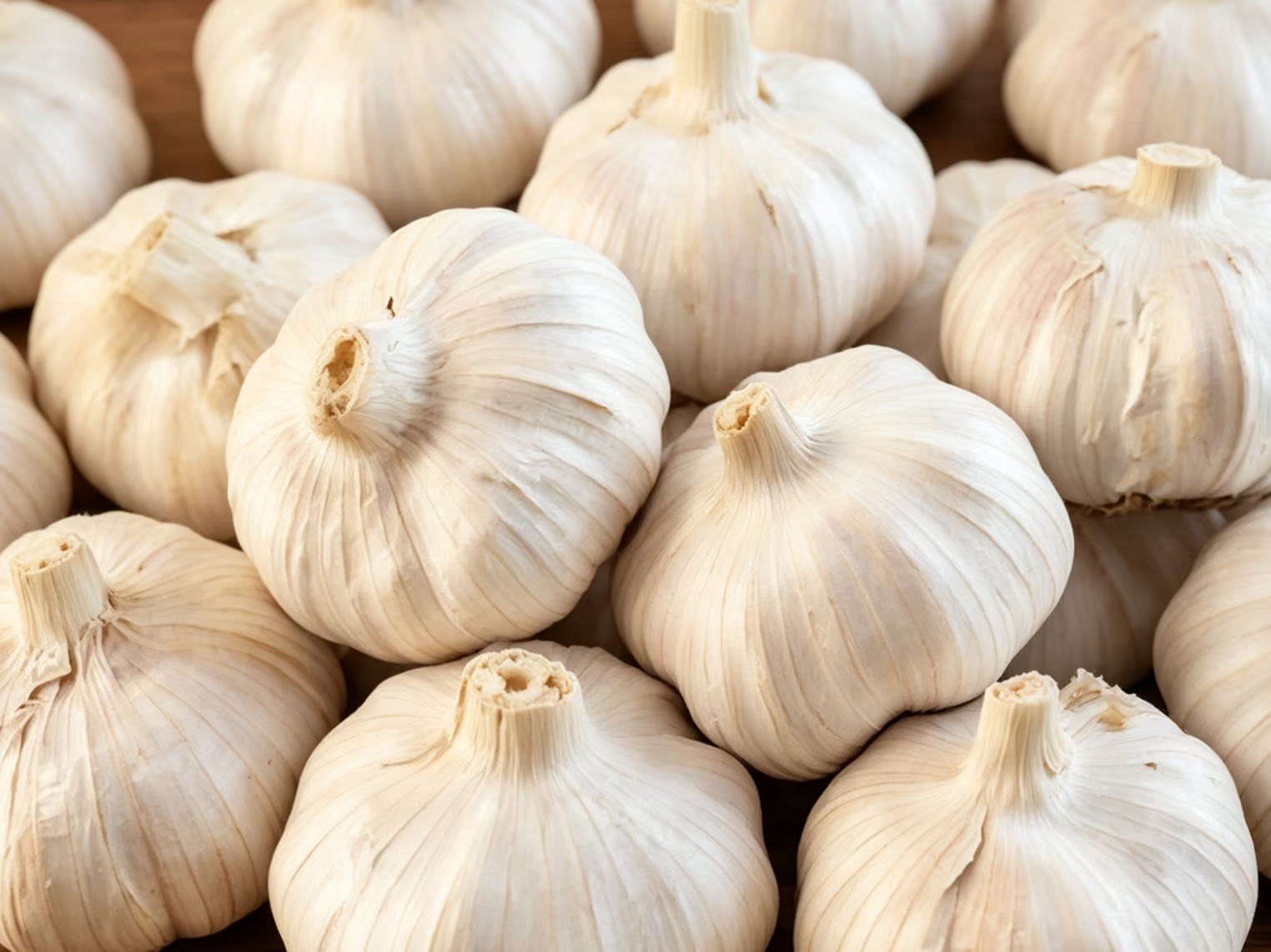
Fresh Garlic export supply
Buyer specifications

Fresh Garlic

Fresh, cleaned and graded to confirmed buyer requirements

Meicun coordinates fresh garlic sourcing, grading, packing, quality checks and export documentation for professional buyers. White and purple programs are matched to destination-market and packing requirements.
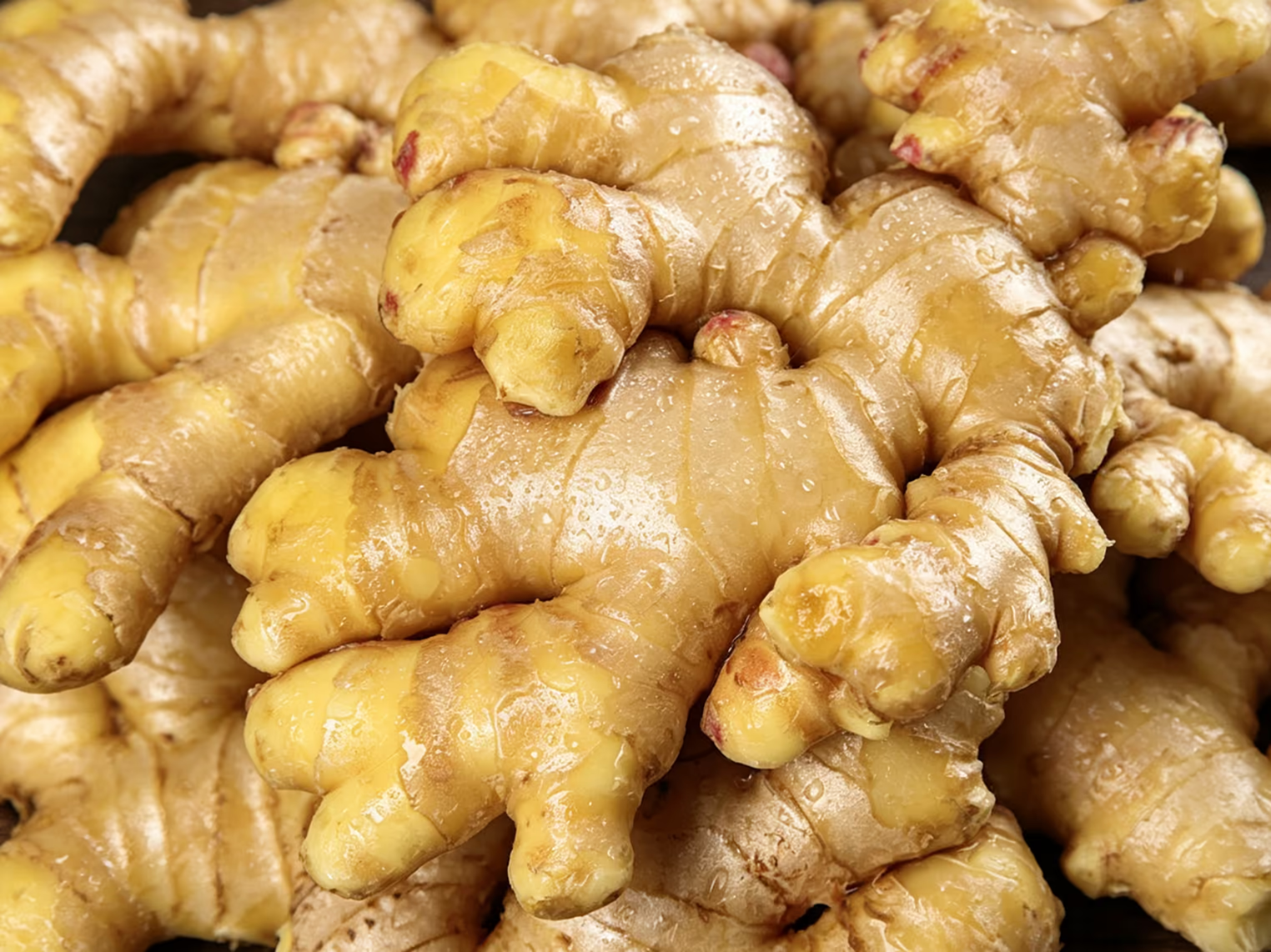
Fresh Ginger export supply
Buyer specifications

Fresh Ginger

Cleaning, drying and grading options matched to buyer specifications

Fresh ginger programs can be prepared as washed or air-dried supply. Meicun coordinates crop selection, processing condition, packing, pre-shipment checks and applicable trade documents.
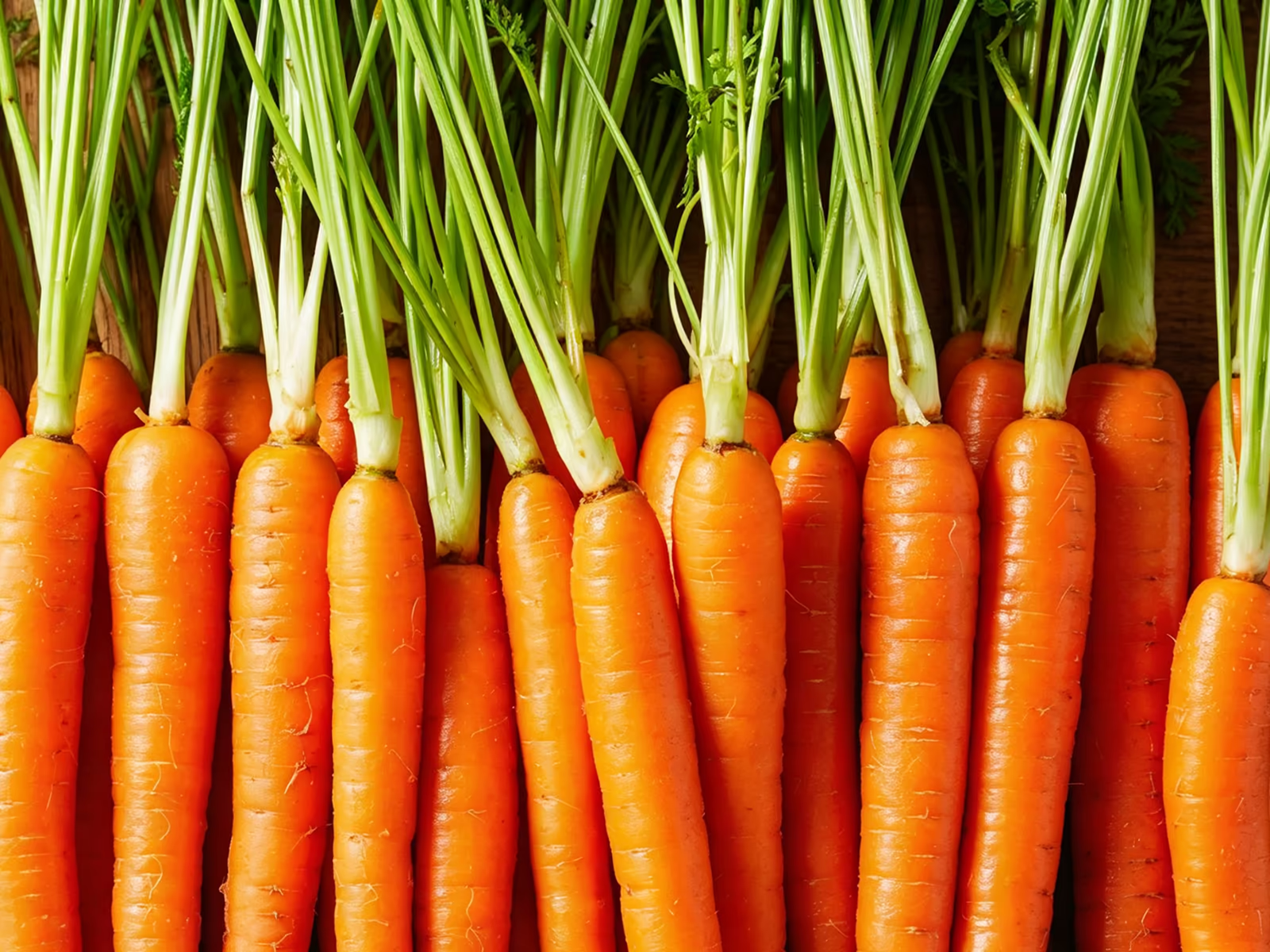
Fresh Carrots export supply
Buyer specifications

Fresh Carrots

Fresh, cleaned and graded to agreed specifications

Meicun supports professional fresh-carrot procurement with buyer-defined grading, packing coordination, quality checks and the export documents applicable to the destination market.

Request a lot-specific quotation

Send your target grade, packing, volume, destination port, delivery window and required documents. We will confirm crop availability and the next quotation step within one business day.

Start Fresh Taro inquiry